Sunday message · 21 Days of Prayer and Fasting series
Listen to the message
Message Summary
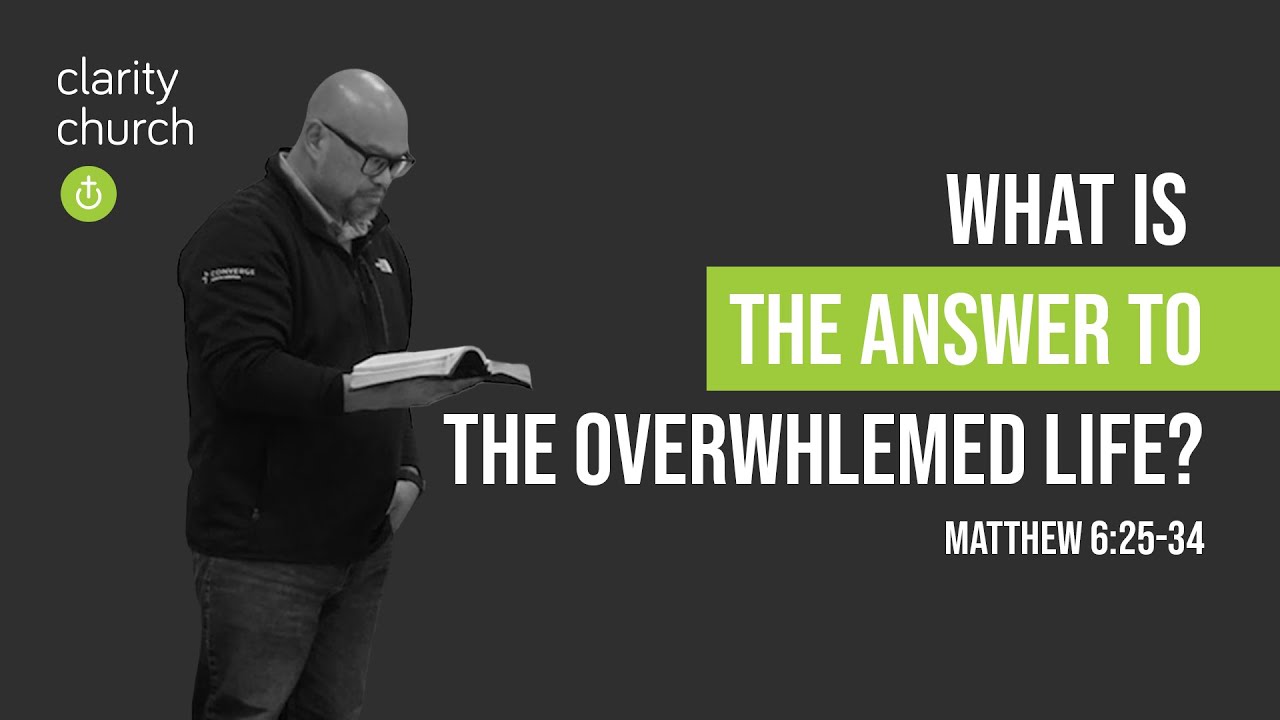
In the third message of the 21 Days of Prayer and Fasting series, Pastor Phillip Santillan turns to Matthew 6:25–34 and Jesus’ words about worry. Most of us know what it is to sit still while our minds race over bills, kids, work, health and the future. Worry can feel productive, but it only exhausts us. Prayer and fasting are no magic cure, Phil says, but a tangible way to interrupt the noise.
Jesus is shaping what his disciples seek, trust and live for, so Phil asks: who or what is driving what I seek, trust and live for? Whatever drives us is what we serve. The passage begins with “therefore,” tying it to Jesus’ warning that no one can serve both God and money; worry is how serving the wrong master shows up in everyday life. Jesus does not condemn planning or hard work; he confronts anxious preoccupation that shrinks life down to survival.
The birds, fed by the heavenly Father, show that God is not distant or annoyed by our needs. As one scholar puts it, borrowing from Martin Luther, disciples still work, but they need not fret. Worry cannot add a moment to life; it only takes our time, hope and energy. The wildflowers show that God clothes even temporary things with beauty. When Jesus says “you of little faith,” he is not shaming the burdened but showing that anxiety reveals what we believe about God.
Everyone seeks something; the question is what our lives prove we seek first. At the heart of the passage is the command to seek first the kingdom of God and his righteousness, a continuing way of life rather than a burst of emotion at youth camp. It means submitting to God’s reign now, joining its advance and longing for its completion, like the old-timers Phil remembers who could not wait to see the Lord. The promise covers “these things,” not all things; as R.T. France notes, disciples are promised survival, not affluence.
Jesus admits each day has enough trouble of its own, so Phil urges us to stop borrowing tomorrow’s trouble. Drawing on D.A. Carson, he says today’s grace is for today, and if tomorrow brings new trouble, there will be new grace to meet it. He names the worries many carry, from immigration enforcement activity in Minnesota that feels close for some, to fears of division and lawlessness, to strain at home. Jesus does not deny trouble; he confronts fear’s attempt to make itself first.
Citing Scot McKnight, Phil says the local church is one of the main places God’s reign is practiced, so the church seeks the kingdom together. With plenty of grace, he invites everyone to tie their fasting to what they carry: interrupting spending for financial worry, surrendering what makes them feel in control, or fasting from media that fuels anger. He urges people to pray with and check on one another. He closes with the good news that in Jesus, God is a Father who knows what we need and gives grace to obey him today.