Sunday message · The Next Right Thing series
Listen to the message
Message Summary
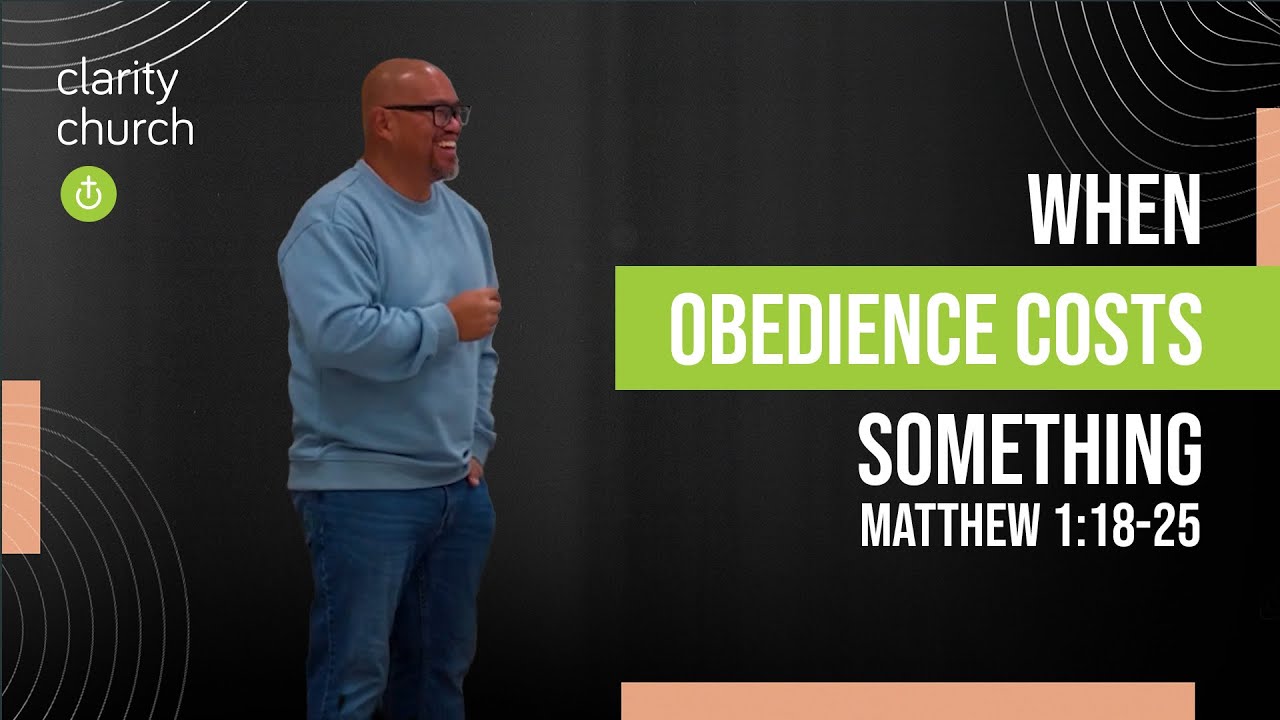
In the final message of The Next Right Thing series, Pastor Phillip Santillan turns to Matthew 1:18–25 and the story of Joseph. After weeks on Abraham, Joseph in Genesis and Philip, the series closes with a harder truth: obedience leads to God’s blessing, but the next right step can cost us something. Phil, a fan of woodworking videos, notes that carpenters live by measure twice, cut once. Joseph, a carpenter from Nazareth, likely valued a clear plan and control, until God interrupted that plan.
Betrothal was legally binding, so Mary’s pregnancy was devastating news for a man whose plans were set. Being righteous, Joseph decides to divorce her quietly. He does not lash out or shame her; as one scholar explains, marrying her would have looked like an admission of guilt, while a public divorce would have disgraced her. Yet even righteous people can make the wrong choice when they are afraid. Fear does not always look like panic; sometimes it looks like control, trying to manage the damage ourselves.
The angel tells Joseph not to be afraid. God honors righteous hearts that make imperfect choices, Phil says, and he comforts Joseph, because underneath every attempt to control our lives is fear: of looking foolish, of losing what we love, of obedience costing too much. Fear is not the absence of faith; it is where faith gets tested. God does not give Joseph the whole plan, only the next steps: take Mary as your wife and name the child Jesus. Often God hands us not a blueprint but the next board to nail down.
What felt like chaos to Joseph was fulfillment from God’s perspective: the virgin would bear a son called Emmanuel, God with us. That name is the anchor for every unknown, fear and cost; we never walk alone. God was not asking Joseph to carry the weight of the world, only to care for the one who would. Joseph obeyed, and though he can seem like an extra, he would hold and train the child who holds the world.
Phil wonders how many opportunities we miss because of fear, not lottery tickets or promotions but opportunities with eternal implications: living on mission, sharing the gospel and letting our light shine. Jesus spoke often about fear, reminding his followers they are valuable to God. The most faithful people in God’s story are rarely in the spotlight, and Joseph’s story is less about his strong faith than about God’s faithfulness. Following God into the unknown begins and ends with trust.
The next right thing may be to finally trust Jesus, not as a religious idea but by submitting to him and his word, to stop trying to control everything, or to obey in something long put off. No one needs to see the whole plan, only the next step. The story ends not with Joseph fixing what was broken but with Jesus entering into brokenness. Phil closes by praying that the church would walk with courage into the unknown, finding peace because Emmanuel walks with them every step.
Questions about Joseph and Emmanuel
Emmanuel, also spelled Immanuel, means “God with us,” and it is a name for Jesus (Matthew 1:23). Matthew says Jesus’ birth fulfilled Isaiah’s promise that the virgin would bear a son called Immanuel (Isaiah 7:14). Pastor Phil calls the name the anchor for every unknown, fear and cost: those who follow Jesus never walk alone, because Emmanuel walks with them every step.
Because he was a righteous man who didn’t want to disgrace her publicly (Matthew 1:19). Betrothal was legally binding, so ending it meant a divorce; as one scholar explains, marrying her would have looked like an admission of guilt, while a public divorce would have shamed her. Pastor Phil adds that even righteous people can choose wrongly when afraid, which is why the angel told Joseph not to be afraid (1:20).
Yes. People in Nazareth called Jesus “the carpenter’s son” (Matthew 13:55), and Mark calls Jesus himself “the carpenter” (Mark 6:3). Pastor Phil notes that carpenters live by measure twice, cut once, so Joseph likely valued a clear plan, until God interrupted it. God didn’t hand him a blueprint, only the next board to nail down: take Mary as your wife and name the child Jesus.
That obedience may cost something, but God gives the next step, not the whole plan. Joseph faced a pregnancy that upended his plans, and the angel told him only to take Mary as his wife and name the child Jesus (Matthew 1:20–21). When he woke, he did it (1:24). Pastor Phil says Joseph’s story is less about strong faith than about God’s faithfulness, and fear is where faith gets tested.