Sunday message · The Bible Together series
Listen to the message
Message Summary
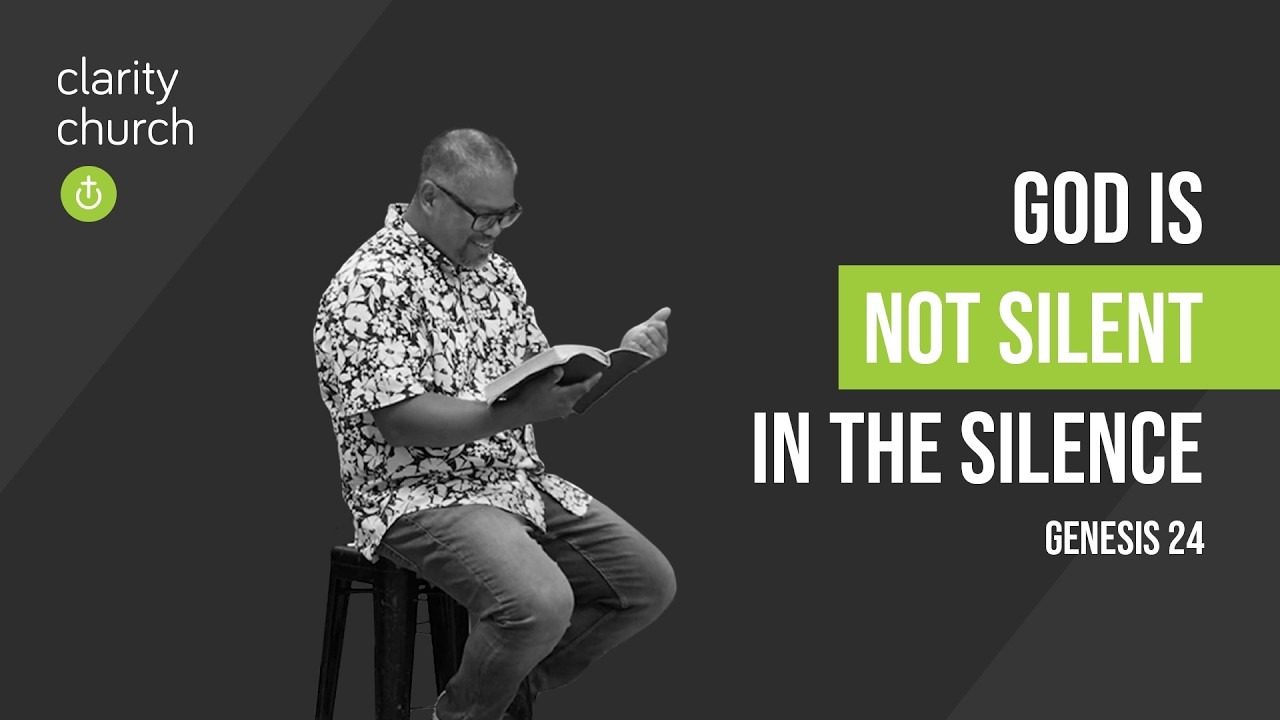
In The Bible Together, a summer series in which the church studies the same passage as its kids’ ministry, Pastor Phillip Santillan reads all of Genesis 24 aloud, trusting that simply reading God’s word together is enough. Sarah has died, Abraham is old, and Isaac is unmarried, so the future of God’s promise hangs on one question: who will Isaac marry? It is the longest chapter in Genesis, and almost all of it is spent on one afternoon at one well. Phil asks why Moses slows down here.
He admits that in his own life there are long stretches where nothing miraculous seems to happen, and God’s promises and everyday life do not always seem to talk to each other. Genesis 24 has no burning bush or voice from heaven, just an old man, a trusted servant and a prayer at a well hundreds of miles from home. Abraham binds the servant with a solemn oath, which Phil compares to a president’s hand on a Bible. When the servant asks what happens if the woman says no, Abraham’s whole strategy is to go and trust that God is already there.
At the well the servant prays one of the most specific prayers in the Bible: let the woman who offers to water all ten camels be the one, hours of work for a stranger. He is not demanding a miracle but asking to recognize God’s hand in something ordinary. Most of us know what it is to pray about a job, a relationship or a child and hear only silence. Yet before he finishes praying, Rebekah arrives and does exactly that, unprompted. Right away the servant worships, not as a victory lap but as trust offered before anyone knows how the story ends.
Phil warns that this is not a method for finding God’s will. Treating a warm feeling or a sign as a verdict is confirmation bias disguised as spirituality. The story reveals God’s faithfulness in the ordinary and unseen. The servant was also watching Rebekah’s generous character, and Phil urges us to notice what people do when nobody is keeping score. Twice the servant prays and worships before he knows the outcome: “Faith has shown up before certainty.” Had Rebekah said no, there would be no Jacob, no King David and, generations later, no manger.
Looking back on his own path through several moves and church jobs, Phil sees how every time he reached for something bigger, God kept routing him back to church plants until he planted one himself. That pattern was invisible at the time, and he suggests that what we call coincidence may be God quietly at work.
So pray as if the outcome is in God’s hands, and act as if obedience is still your responsibility. Ask whether you are only praying for a sign or also doing the next ordinary, faithful thing in front of you. God is working even when you cannot see it, Phil says, so keep showing up at the well.