Sunday message · The Bible Together series
Listen to the message
Message Summary
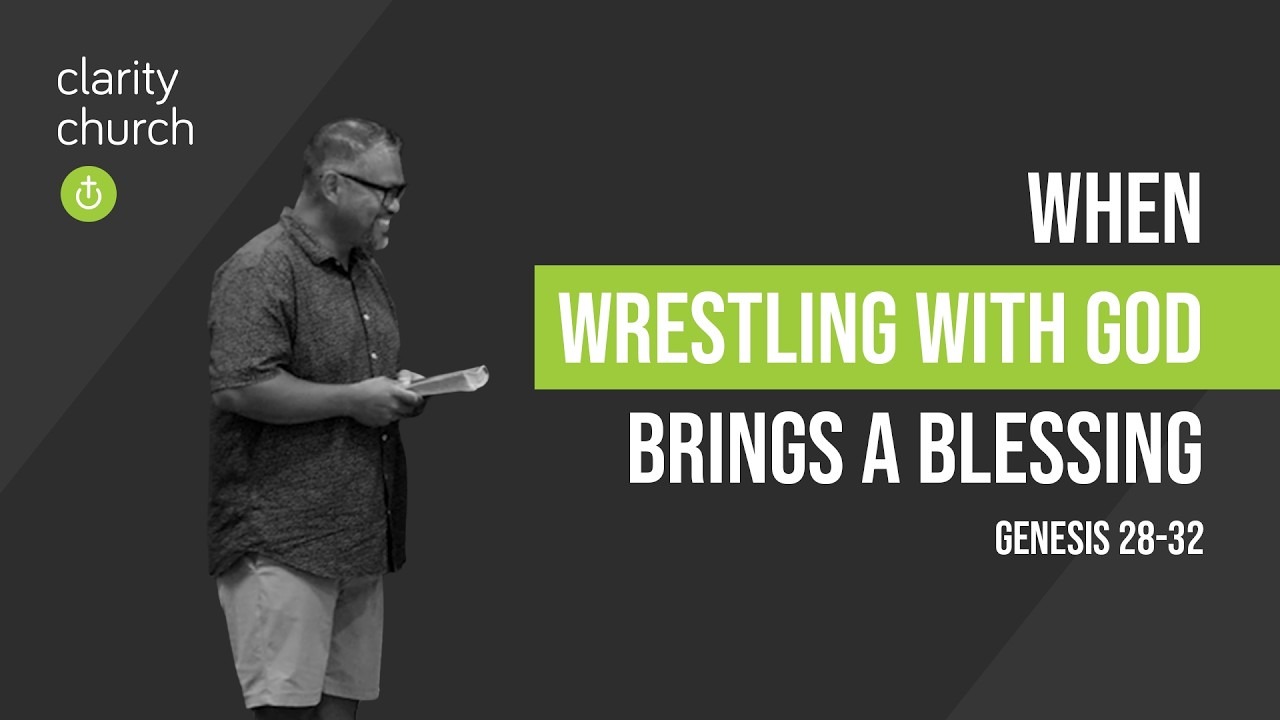
In The Bible Together series, with the church’s elementary kids joining the gathering, Pastor Phillip Santillan follows Jacob from Genesis 28 to 32. We do not fully choose our names, he says; we spend our lives growing into them or living them down. Jacob’s name means he grabs, or deceiver, and he lived up to it, cheating his brother and tricking his blind father. Now he is running for his life, alone, with a rock for a pillow.
At Bethel, God meets him in a dream and makes a promise with no conditions: I am with you, I will watch over you, I will not leave you. Jacob answers with a string of ifs: if God provides and brings him home safely, then the Lord will be his God. Citing a Bible scholar, Phil notes that God wants nothing contractual with Jacob, while Jacob wants everything contractual with God. He uses God rather than desiring him.
For twenty years with his uncle Laban, Jacob schemes, grows rich and builds a family. There is a fine line, Phil warns, between a hard worker who trusts God and someone who claims to trust God but only trusts his work. Heading home to face Esau, Jacob sends waves of gifts and splits his family into two camps. Then night falls, and he is alone and afraid, right back where he started.
A man wrestles him until daybreak and cannot defeat him, yet with a touch dislocates his hip. God was holding back the whole time, fighting in a way Jacob could survive. Crippled in his own strength, Jacob stops bargaining. “I will not let you go unless you bless me” sounds like the old Jacob, but now he is not scheming, only clinging; he finally wants God himself. Drawing on Tim Keller, Phil pictures Jacob realizing he had used God to chase blessings when God was the blessing all along. Jacob leaves with a new name, Israel, and a limp.
Phil confesses that at a recent all-church meeting he spoke about biblical hospitality as if its fruit depended on the church’s performance. He should have pointed to Psalm 127: unless the Lord builds the house, its builders labor in vain. Many of us carry weights never meant for us: a marriage, our children’s futures, or whether we are doing enough for God to accept us. His invitation: stop bargaining and hold on to God. “Stop using God as a means to an end and just let him be the end.”
The good news is that God, who held back at the river, emptied himself in Jesus and took on the cross the full blow Jacob felt only as a touch. The blessing is a gift, and God gives a new name to all who receive it: forgiven, beloved and his. He is faithful to the person Jacob will become, “even while Jacob is still becoming him.” Like Jacob, we may limp the whole way as we grow into that name, but we can stop carrying what was never ours to carry.
Questions about Jacob
Because God met him at the end of twenty years of scheming and bargaining. Alone at night before facing the brother he had cheated, Jacob wrestled a man until daybreak (Genesis 32:24). The message sees God holding back the whole time, fighting in a way Jacob could survive. Once his hip was struck, Jacob stopped bargaining and clung: “I will not let you go unless you bless me” (32:26).
Jacob means ‘he grasps the heel’ or ‘he deceives.’ He was named for grasping his twin brother Esau’s heel at birth (Genesis 25:26), and he lived up to the name, taking Esau’s birthright and blessing and tricking his blind father (Genesis 27:36). The message’s point is that we spend our lives either growing into our names or living them down.
Because Jacob had struggled with God and with men and had prevailed (Genesis 32:28); Israel means ‘he struggles with God.’ In the message, the new name marks a new heart: the man who had bargained with God for twenty years finally stopped scheming and clung to God himself. He left Peniel, where he had seen God face to face, with a new name and a limp (Genesis 32:30–31).
In a dream of a ladder reaching to heaven, God promised Jacob, with no conditions, that he would be with him, watch over him wherever he went, bring him back to the land and not leave him (Genesis 28:12–15). Jacob answered with conditions: if God provided for him and brought him home safely, then the LORD would be his God (28:20–21).