Sunday message · The Bible Together series
Listen to the message
Message Summary
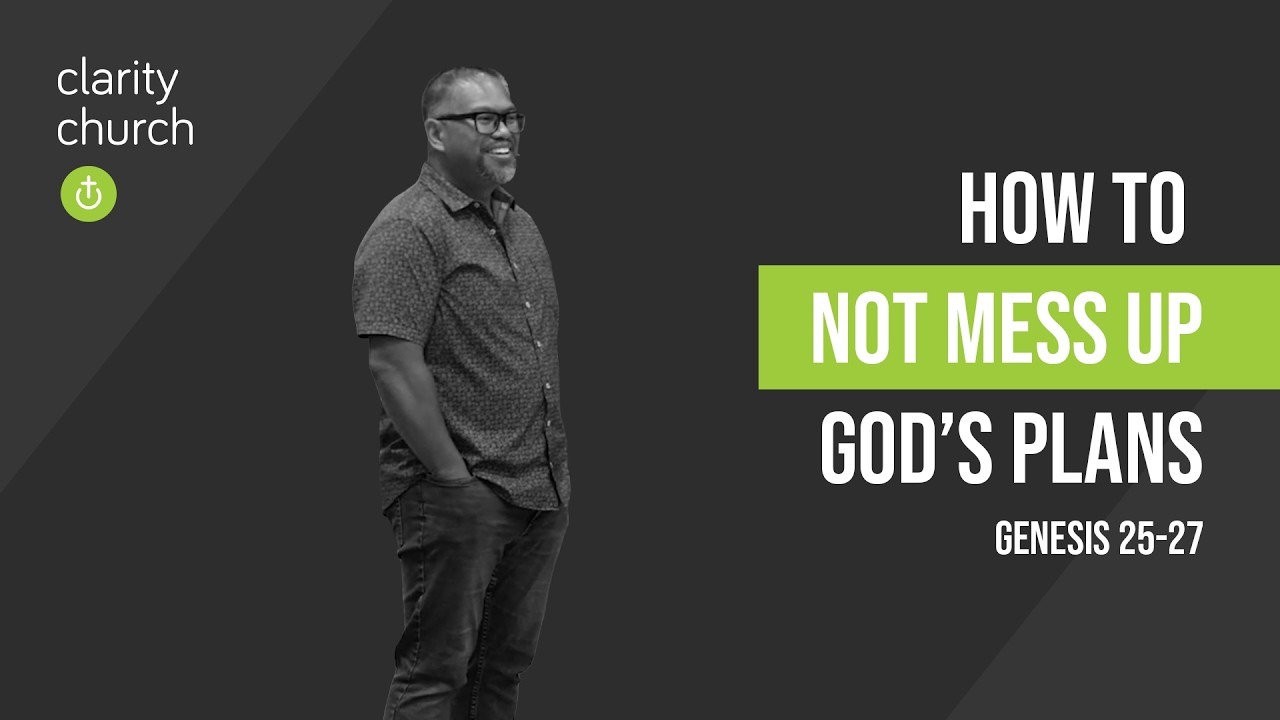
Working through Genesis 25–27, Pastor Phillip Santillan points out that the Bible never revises its characters to make God look better, because the story God is telling does not require better people to be true. Isaac and Rebekah’s family carries the promise God made to Abraham to bless every nation, and before their twins are born, God declares that the older will serve the younger. The promise will continue through Jacob. What is at stake, Phil explains, is not family drama but the birthright and the blessing, which passed on covenant leadership irreversibly.
Esau, exhausted and hungry, trades his birthright to Jacob for a bowl of red stew, then eats, drinks and walks away. Hebrews 12:16 holds him up as a warning, an “irreverent person like Esau.” Irreverence, Phil says, is not malice; it is a life so oriented around right now that it cannot see the sacredness of what it holds. That raises the central question: what happens when people who have heard God’s word decide they cannot wait for him to act on it?
In Genesis 27, Isaac, old and blind, wants a favorite meal before blessing Esau, the same appetite that cost Esau his birthright. Rebekah overhears and devises a scheme with goats, Esau’s clothes and goat skins. She believes God’s word enough to act on it but not enough to wait on it. Jacob objects only that he might get caught, then lies to his father’s face and receives the blessing, and Esau cries out for a blessing of his own. No one looks good. Yet Rebekah was trying to secure an outcome God had already guaranteed and to help a God who did not need her help.
Phil traces the pattern through Genesis, from Cain and Abel to Joseph, and each generation asks whether God’s word holds through what people do to each other. Genesis saves its answer for the end, in Joseph’s words to his brothers: they intended harm, but God intended good. God is not reactive or scrambling to recover. “God’s faithfulness does not rise and fall with the quality of human decisions.” Without that trust, we manage outcomes that were never ours, carry weight never meant for us and call it faithfulness when it is really fear.
So Phil invites those who have been controlling everything to release it. To those who believe that what was done to them, or what they have done, has permanently damaged God’s plan, he says God did not revoke his faithfulness because of human unfaithfulness. The damage is real, but it does not get the final word. This is not a call to a passive life, he says, but to transfer the weight. For anyone struggling with faith, God invites them into the story because of what Jesus has done in his death and resurrection. For believers, the question is whether we are living as though God’s faithfulness depends on us. “God does not need our help; he needs our trust.” He closes in prayer, releasing control, pain, guilt and shame to God.