Sunday message · The Bible Together series
Listen to the message
Message Summary
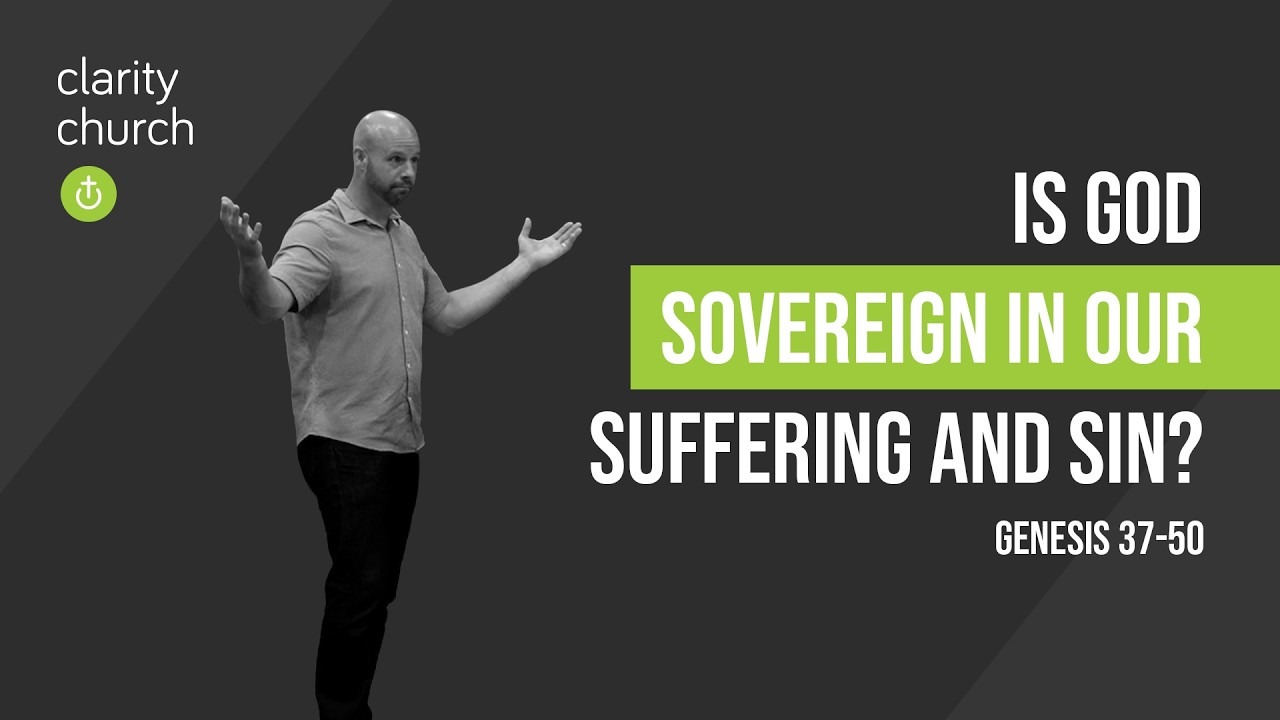
As the church’s summer journey through the Old Testament reaches the end of Genesis, Todd Lohstreter covers all fourteen chapters of Joseph’s story, Genesis 37–50, to show how God is sovereign over both our suffering and our sin. At seventeen, Joseph is his father’s favorite, wears the coat of many colors, and dreams that his family will bow to him. His brothers throw him into a dry pit, sit down to eat while he cries out, and at Judah’s suggestion sell him into slavery. Todd notes how favoritism drove a divide so deep that brothers would disown a brother.
The story then detours into Judah’s own moral failure, which ends with him admitting that his daughter-in-law was more righteous than he was. Meanwhile Joseph prospers in Potiphar’s house, refuses the repeated advances of Potiphar’s wife because he will not sin against God, and is falsely accused and thrown into prison. Yet again and again Scripture says God was with Joseph. “Don’t miss the Lord’s blessings because of hard times,” Todd urges; we may not always feel God’s presence, but that does not mean it is absent.
In prison Joseph interprets dreams, giving the credit to God, but the cupbearer forgets him for two more years. When no one can interpret Pharaoh’s dreams, Joseph is summoned, foretells seven years of plenty and seven of famine, and at thirty becomes second in Egypt. When his brothers come for grain, he tests them, and Judah, who once sold his brother, offers himself in Benjamin’s place. Joseph breaks down, reveals himself and says God sent him ahead to preserve life. After their father dies, the brothers still fear revenge, and Joseph answers, “Am I in the place of God?”
Todd calls this one of the most profound verses in Scripture: “you meant this for evil, but God meant this for good.” The passage does not say God merely used it for good; the same word describes both intentions, and the same is true of Potiphar’s wife and the forgetful cupbearer. Why, then, did God not prevent it? First, God works through circumstances to shape our futures in ways we cannot see at the time. Todd shares that a business of his once failed, yet that experience helped him land a role he is far happier in. Joseph could not see in Genesis 37 what he saw in Genesis 50. Second, God uses hardship to draw us closer, because he is after our hearts. Hebrews 12:11 says discipline seems painful for the moment but later yields the peaceful fruit of righteousness.
Todd also points to Judah, whose mess was of his own making. The messianic line runs through Judah, not Joseph, and Judah changed so much that he offered his life for his brother. The truth of Genesis 50 can apply to our mistakes as well. Whether we are suffering unfairly or need to hand our own mess to the Lord and ask him to work his redemptive purposes through it, Todd concludes, “God is sovereign, we are accountable, and he wants our hearts.”